
Buying a House in the Netherlands, France or Abroad as a Belgian: Benefits, Risks and Tax Traps

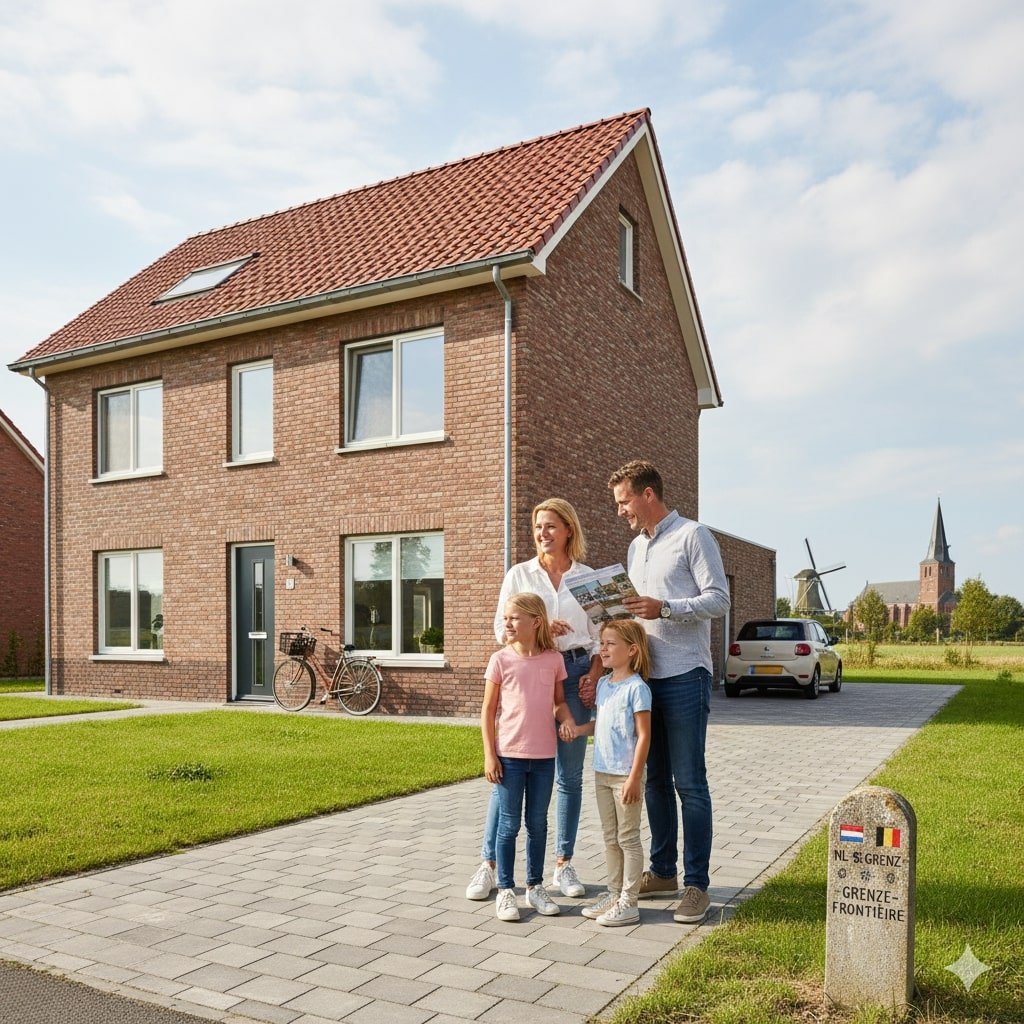
Buying a house abroad: why Belgians are increasingly thinking about it
More and more Belgians are searching for property just across the border: a house in the Netherlands for affordability, a home in France (the Ardennes, Provence) for lifestyle reasons, or real estate in Germany or Luxembourg as an investment. The motivations are often very tangible: space, nature, lower energy consumption, or simply more house for your money.
Buying abroad does not only bring opportunities, however - it also comes with legal, fiscal and practical pitfalls. This guide helps you get a clear picture of the main obstacles and advantages.
Can Belgians buy a property abroad?
In principle, yes. Within the EU, the free movement of capital applies, so as a Belgian you can buy a house in the Netherlands, France, Germany or Luxembourg without any special authorisation. Foreign buyers face no additional restrictions - no more than local owners do.
That said, every border brings its own set of rules.
Buying a house in the Netherlands: what attracts Belgians
The Netherlands is, for many Belgians, the go-to cross-border destination to buy a property. The reasons:
✦ 100% free & No obligation
Sell your property with the best agent
Compare the top 3 agents in your region for free and save on commission.
Compare agents →- Larger homes for a comparable price (especially in Friesland, Limburg and North Brabant)
- A stable property market and reliable legal frameworks
- A more developed mortgage market and lower interest rates
- No energy performance obligation as strict as in Belgium (energy labels are less stringent in the Netherlands until 2030)
How does buying in the Netherlands work for a Belgian?
What is different from Belgium:
- No notary, but a transfer agent (estate agents handle the legal processing of the transaction themselves).
- No registration duty, but a transfer tax (overdrachtsbelasting): approximately 2% for first-time buyers and 6 to 10.4% for others, depending on the province and buyer profile.
- Mortgage market: Dutch banks are not always willing to lend to foreigners, and certainly not for the full purchase price. Many require that you bring in at least 20% of your own funds.
Tax implications for Belgians
This is the crucial part - and where many Belgians go wrong:
- Mortgage interest deduction: if you live in the Netherlands and hold a Dutch mortgage (and are therefore registered there), you can still benefit from interest deductibility. But as soon as you return to Belgium, that benefit falls away.
- Property levies / real estate taxes: the Netherlands has no annual wealth tax, but you will pay - depending on the municipality - levies on the property itself.
- Income tax return: if you own the Dutch property as your own residence (rather than as a rented investment), you do not need to declare rental income. However, your registration in the Netherlands as a property owner may have consequences for your Belgian tax obligations.
Important: before buying in the Netherlands, ask your tax adviser whether this has any impact on your overall tax situation as a Belgian resident - especially if you are still domiciled in Belgium.
Buying a house in France: luxury and space - but complex taxes
France attracts many Belgians, particularly for second homes. The reasons:
- A lot of house for the money, especially in the Dordogne, Limousin or away from the Côte d'Azur
- A better climate and plenty of sunshine
- Quiet villages and more open space than in Belgium
The buying process in France
France works just like Belgium with a notary (notaire), so the process will feel familiar. The costs:
- Transfer tax: approximately 5.7% of the purchase price (as part of the total "frais de notaire" of 7 to 8%)
- Notary fees: typically 2 to 3% (higher than in Belgium)
- Total acquisition costs: 7 to 8% (considerably more than in Belgium)
Annual taxes in France
This is where things get more complicated:
- Taxe foncière (the owner's share of property tax): annual, depending on location, and can run to several thousand euros a year. In Paris, for example, it is far higher than in rural areas.
- Taxe d'habitation (occupier's portion): also annual, based on the rental value. You can avoid it by renting the property out or registering it as a holiday home.
- Wealth tax (IFI): France taxes worldwide real estate wealth once it exceeds €1.3 million. So if you own a French property on top of Belgian real estate, both may be taken into account.
Rental income: 49% tax!
If you rent out your French property, things get very complicated:
- Standard commercial rental: you pay 49% in taxes and social charges on gross rental income - unless you obtain classification as a gîte or chambre d'hôtes. In that case the rate drops to 5.6% (far more favourable), but achieving that status involves a complex administrative procedure.
This makes a French second home very unattractive for generating passive rental income.
Double taxation: Belgium + France
This is where a major risk lurks:
- Belgium taxes your worldwide income: your rental income from France is also taxed in Belgium (via the cadastral income system).
- France also taxes: rental income, the IFI wealth tax, and the taxe foncière.
France and Belgium have concluded a double tax treaty, but:
- The treaty is old and not always clear-cut.
- Since 2023, a new Franco-Belgian treaty has been in force, which has amended certain provisions relating to pensions and wealth taxation.
The result: you may end up being taxed in both countries. Make sure a tax adviser works this out for you before you commit.
Taking out a mortgage abroad: much harder than you think
This is a significant practical obstacle:
- Dutch banks: generally do not grant mortgages to Belgians, and certainly not on the full purchase price. Some require that you already live and work in the Netherlands.
- French banks: do lend to foreigners, but on stricter terms and at higher interest rates (+0.5 to 1% compared with local borrowers).
- Belgian banks: some will finance Belgian property across the border, but not foreign property.
In practice: many Belgians buy property abroad by saving first and purchasing outright, or by arranging financing through their own bank on preferential terms.
Double tax treaties: not an automatic safeguard
- Belgium and France have a double tax treaty, but it does not automatically prevent double taxation - it merely provides a framework.
- Netherlands-Belgium treaty: considerably clearer, but here too the details must be properly understood.
- Cross-border workers: if you work in the Netherlands and live in Belgium (or vice versa), you need to know with certainty in which country you pay your taxes - there are sometimes favourable arrangements available.
Always have this analysed in advance by a tax adviser who specialises in cross-border real estate. It could save you tens of thousands of euros in tax further down the line.
Practical checklist: buying property abroad yourself?
- ✓ Consult a tax adviser in both countries (essential!).
- ✓ Ask a local estate agent or notary about regulations and local customs.
- ✓ Sort out mortgage financing in advance (far more difficult than in Belgium).
- ✓ Understand the annual costs and taxes (not just the purchase price).
- ✓ Check the double tax treaty as it applies specifically to your situation.
- ✓ Be cautious about rental income (very unfavourable in France).
- ✓ Make sure you have proper legal protection (agent, notary, legal adviser).
The Netherlands as an investment for Belgians: why it can be interesting
If you are considering investing in the Netherlands:
- No annual wealth tax (no yearly levy on the property's value)
- Stable market
- Less stringent energy performance regulations
- Sometimes lower prices than in Belgium (outside the Randstad metropolitan area)
- Mortgage financing is harder to obtain as a foreigner
- Rental yields are generally lower (and Belgians pay tax in both countries)
- The legal process is different (no notary - a transfer agent handles proceedings)
For a purely investment-focused purchase in the Netherlands as a Belgian, the yield and tax burden are not always more attractive than those of Belgian real estate.
Conclusion: buying abroad is possible - but it takes preparation
Buying a house abroad can be both advantageous and highly complex, depending on where, how and why you do it. The Netherlands offers practical advantages (larger homes, better mortgage conditions for residents); France tempts with space and lifestyle but brings complex taxation with it.
The critical factor: tax planning and legal preparation. Invest in both from the outset, and avoid suddenly discovering that you owe tax in both Belgium and abroad - that can be financially devastating.
Would you like to better understand what property in your own region is worth and how the Belgian real estate market works? Start with a free valuation of your current property and compare estate agents with international experience.
Property across the border is an interesting option - but only with thorough preparation and the right advisers.
Frequently asked questions
Can Belgians buy a house in the Netherlands or France without special permission?
Yes, within the EU the free movement of capital applies, so Belgians can buy property in the Netherlands, France, Germany or Luxembourg without any special authorisation. Foreign buyers face no additional restrictions compared to local owners.
What are the main purchase costs when buying a house in France as a Belgian?
The total acquisition costs in France are roughly 7 to 8% of the purchase price. This includes a transfer tax of around 5.7% and notary fees of 2 to 3%, which is considerably more than in Belgium.
How is rental income from a French property taxed?
Standard commercial rental income in France is taxed at 49% in taxes and social charges on gross rental income. If the property qualifies as a gite or chambre d'hotes, the rate drops to 5.6%, but obtaining that classification involves a complex administrative procedure.
Can Belgians get a mortgage from a Dutch or French bank to finance a property abroad?
Dutch banks generally do not grant mortgages to Belgians, and often require at least 20% of your own funds. French banks do lend to foreigners but on stricter terms and at interest rates 0.5 to 1% higher than for local borrowers.
Does the double tax treaty between Belgium and France prevent you from being taxed in both countries?
No, the treaty provides a framework but does not automatically prevent double taxation. Since 2023 a new Franco-Belgian treaty has been in force that amended certain provisions, but you may still end up being taxed in both countries, so getting advice from a specialist tax adviser beforehand is strongly recommended.
"Real estate expert focused on quality control and strategic partnerships."