
Belgian Rental Market: Rising Prices, Housing Shortage and Smart Tips for Tenants and Investors

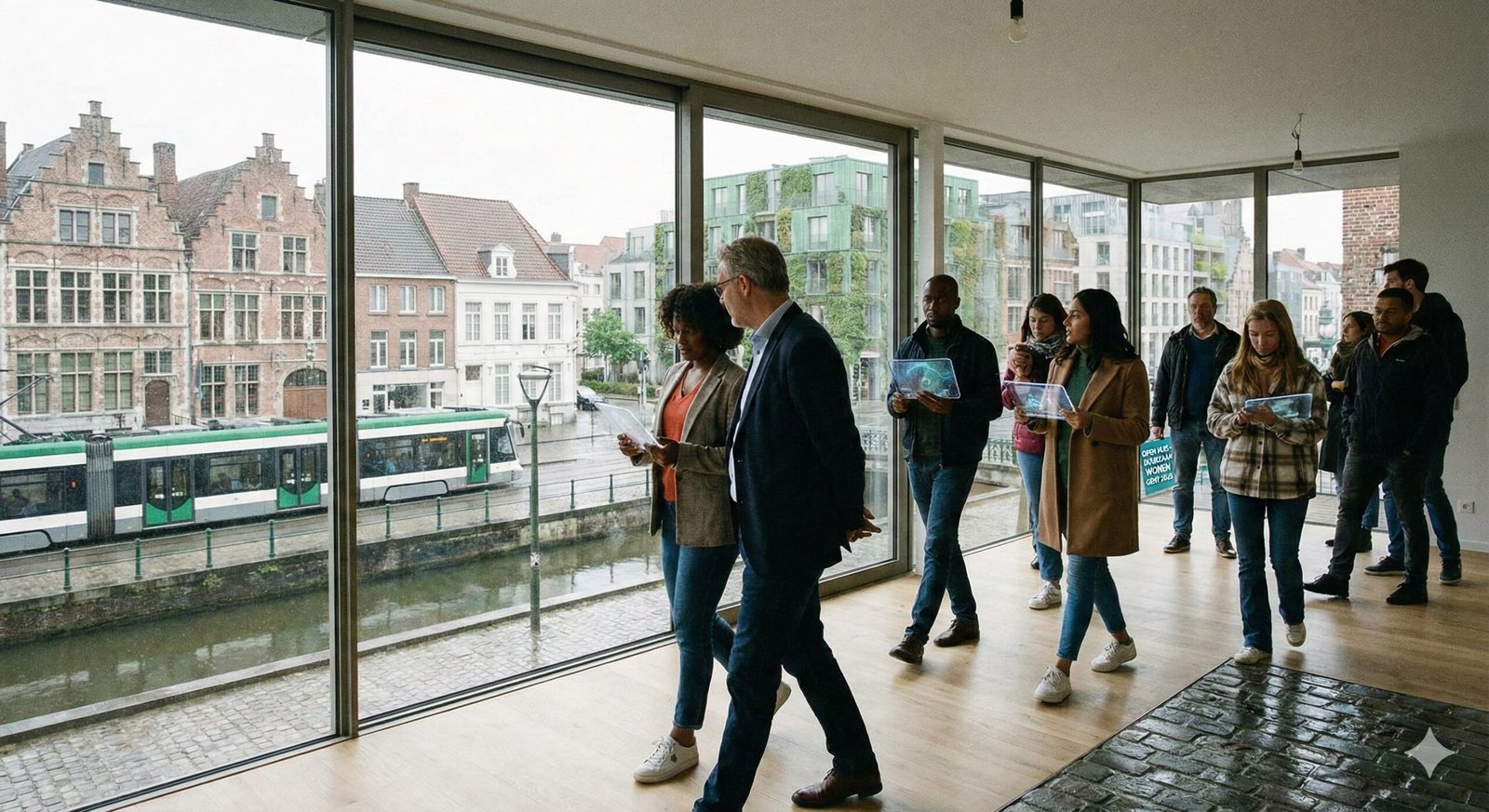
Belgian Rental Market 2025: Crisis Over, but Prices Keep Rising
The Belgian rental market is at a turning point. After years of explosive growth, the rise in rents stabilised in 2025 - but at a level well below the previous peak. At the same time, the market is showing deeper problems: a significant shortage of affordable rental properties, increasingly strict requirements for prospective tenants, and a growing number of renters in financial difficulty. For anyone looking for a home right now, the market still feels tight and expensive. For investors, however, letting property remains attractive - provided you make the right choices.
Rental Prices in Belgium 2025: Current Figures by Region
Rental price growth is accelerating more slowly than in previous years, but increases are still noticeable - and above inflation.
Flanders - average rents by property type:
In Flanders, the average rent for an apartment currently stands at €893 per month (up +1.4% over six months), a terraced house at €1,014 (+2.0%) and a detached house at €1,104. These are the lowest growth rates since 2021, pointing to market corrections.
Rents vary considerably from city to city. Antwerp is the most expensive city in Flanders, followed by Brussels - where apartments cost an average of €1,255 per month, with increases of up to +15% over two years.
✦ 100% free & No obligation
Sell your property with the best agent
Compare the top 3 agents in your region for free and save on commission.
Compare agents →Brussels - higher prices:
An apartment in the Brussels Capital Region rented for an average of €1,255 per month in 2024 (up +6.1%). Studios are slightly cheaper at €854. These extreme prices mean that many Brussels residents are moving out to the surrounding municipalities.
Wallonia - slower growth:
In Walloon cities such as Liège, Namur and Charleroi, rents remain much lower - around €600 to €800 for apartments. There is growth here too, but it is far less dramatic than in Flanders.
Overall pattern: the symbolic threshold of €900 for apartments has been crossed - not everywhere, but in several regions at the same time.
The Core Problem: A Shortage of Rental Properties
Behind the price figures lies a deeper problem. The supply of rental properties is structurally declining while demand keeps growing. This creates a bewildering picture:
Number of rental contracts falling:
In 2025, nearly 30% fewer new rental contracts were signed in Flanders than in 2024. The number of new rental agreements is now falling below the rate of inflation - a first warning sign of a market in danger of seizing up.
In the central cities of Brussels, the picture is even more alarming: there, the number of new rental contracts fell by -17.5%.
Causes of the shortage:
- Investors pulling out: The tax burden on landlords is increasing - higher property taxes, reduced mortgage interest deductions. Many private landlords are selling their properties to buyers rather than continuing to let them.
- Stricter energy standards: With tougher EPB requirements (EPC labels), renovations are becoming necessary - and they are costly and time-consuming.
- Rent regulation: The points-based system for mid-market rents restricts pricing freedom and makes letting less attractive.
- Structural housing shortage: By 2050, a shortfall of 330,000 homes is projected in Belgium - particularly apartments.
The result: more than 100 applicants for a single property has become the norm.
Rental Prices and Affordability: The Crisis for Families
Rents are rising far faster than incomes, with serious consequences:
Groups most at risk:
- Single people on low incomes are now spending 50% to 60% of their net income on rent - against the recommended 30%
- Families with children are increasingly forced to choose between paying rent and buying food
- Pensioners are having to dip into their savings to cover rent.
Where is it worst?
The crisis is most acute in Brussels - where rents rose by +15% in two years - and in the main cities of Flanders. Apartments in the city centres of Ghent, Leuven and Antwerp are rising faster than elsewhere.
Notably, anyone looking for a rental under €700 per month will find almost nothing available. The affordable rental market - below €800 - is shrinking by the day.
For Tenants: How to Navigate This Market
Anyone searching for a rental in 2025 feels the pressure. But making smart, tactical choices does help.
1. Rethink your search priorities
City-centre locations are simply too expensive. Look at urban fringe municipalities - Mechelen instead of Brussels, Aarschot instead of Leuven. Rents are often 15% to 25% lower, while accessibility remains perfectly good.
2. Be flexible about property type
A studio (€600-€750) or a one-bedroom apartment is cheaper than a full-sized flat. If you were previously living in a family home, consider switching to an apartment.
3. Build a strong energy profile and reputation
Landlords prefer tenants with:**
- A stable and sufficient income - at least 2.5 to 3 times the monthly rent
- References from previous landlords
- No outstanding debts with debt collectors or bailiffs
- An employment contract or self-employed status
Put together a strong "tenant profile": clean references, proof of income and a completed rental deposit - even if you are slightly below the threshold.
4. Act early
Rental listings move extremely fast. Check Immoweb, Zimmo and Immovlan every day. Respond IMMEDIATELY to new listings. Wait until the next day and you have missed your chance.
5. Negotiate a longer lease
Fixed-term contracts of three years or more give landlords security. This is a compelling argument. Many landlords will offer a discount in exchange for a longer commitment.
6. Alternatives: house sharing, co-living or house sitting
Split the rent with housemates. Look for co-living platforms - far cheaper per person. Consider offering yourself as a house sitter - near-free accommodation in exchange for looking after a property.
For Investors: Is Letting Still Worthwhile in 2025?
Despite the market pressure, letting property remains attractive - provided you understand how the returns work.
Rental yield in 2025:
A gross rental yield of 3% to 4.5% is commonly cited. But this gives an incomplete picture. The net yield - after deducting management fees, insurance, maintenance and income taxes - is more realistically 2.5% to 3.5%.
Example:
- Apartment purchase price: €250,000
- Rent: €900/month = €10,800/year
- Costs (management 5%, insurance 1%, maintenance 4%): -€2,500/year
- Net rent: €8,300/year = 3.3% gross yield
- With a loan (€150,000 at 3.5%): repayments of €5,250/year
- Return on own capital (€100,000): approx. 3%
This is not spectacular, but it is stable.
Why does letting remain attractive?
- Leverage effect: You earn a return not only on your own money but also on borrowed capital.
- Capital appreciation: Apartments in city centres have historically risen by 3% to 4% per year - which adds up significantly over time.
- Inflation hedge: Rents follow inflation - at least in part. Your nominal return grows along with it.
- Property taxation: With smart planning - VAT benefits on new-build properties, depreciation allowances - your return can improve.
Challenges for investors in 2025:
- Property taxes: With a deemed return of 5.88%, you pay property taxes even without actual rental income
- Rental legislation: The points-based system and stricter rules limit your pricing freedom
- Energy obligations: Renovations are sometimes required, at considerable cost
- Reduced tax benefits: Mortgage interest deductions have been scaled back and depreciation options are limited
What Is the Government Doing? Regulation in 2025
The Belgian government introduced a number of measures in 2025 to make the rental market more accessible - but these are also putting pressure on supply:
- Points-based system for mid-market rents: Rents up to a certain value are regulated
- Minimum housing quality standards: Properties must meet specific requirements
- Open-ended contracts: Tenants are protected against frequent terminations
- Rent indexation: Automatic indexation applies in many regions
These rules protect tenants - but they deter investors, which further reduces supply.
Rental Market Outlook: 2025-2026
- Rents: Growth will remain moderate - 1.5% to 3% per year - close to inflation
- Supply: Will continue to shrink until a stabilisation around 2027-2028
- Demand: Remains high, particularly for affordable apartments
- Tightness: City centres will be hit hardest; surrounding municipalities will see greater stability
Conclusion: Make Your Choice
The Belgian rental market in 2025 is under pressure but not unstable. For tenants: act fast, stay flexible and be prepared to look beyond the city centre. For investors: expect modest, stable returns - not the growth figures of recent years. If you want to know whether renting or buying is the better option for your situation, compare estate agents, request a free valuation and use the mortgage calculator to work out what is more affordable.
The rental market is not collapsing - but those who are unprepared will lose out. Be proactive, choose wisely.
Frequently asked questions
What are average rental prices in Belgium in 2025?
In Flanders, apartments average €893 per month, terraced houses €1,014, and detached houses €1,104. Brussels is significantly more expensive, with apartments averaging €1,255 per month - up 6.1% in 2024.
Why are there so few rental properties available?
Supply is shrinking because more landlords are selling their properties instead of renting them out, driven by higher taxes and stricter energy requirements. In Flanders, nearly 30% fewer new rental contracts were signed in 2025 compared to 2024.
What income do I need to qualify as a tenant?
Landlords generally expect a stable income of at least 2.5 to 3 times the monthly rent. Having references from previous landlords and no outstanding debts will also strengthen your application.
Is buying a rental property still a good investment in 2025?
Letting property can still be worthwhile, but realistic net yields after costs and taxes are between 2.5% and 3.5%. Investors also benefit from capital appreciation of around 3% to 4% per year historically, plus a leverage effect when using borrowed capital.
Where can tenants find cheaper rentals if city centres are too expensive?
Looking at municipalities on the edge of major cities - such as Mechelen instead of Brussels or Aarschot instead of Leuven - can reduce rent by 15% to 25% while keeping good accessibility. House sharing and co-living platforms are also cheaper alternatives.
"Real estate expert focused on quality control and strategic partnerships."